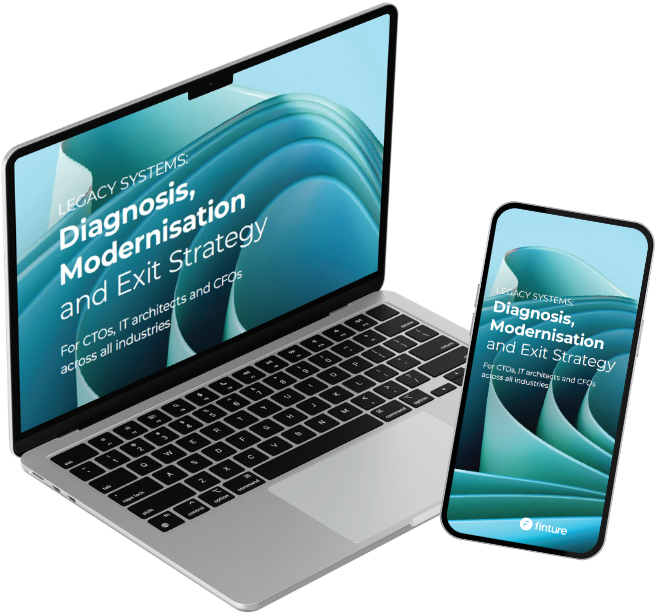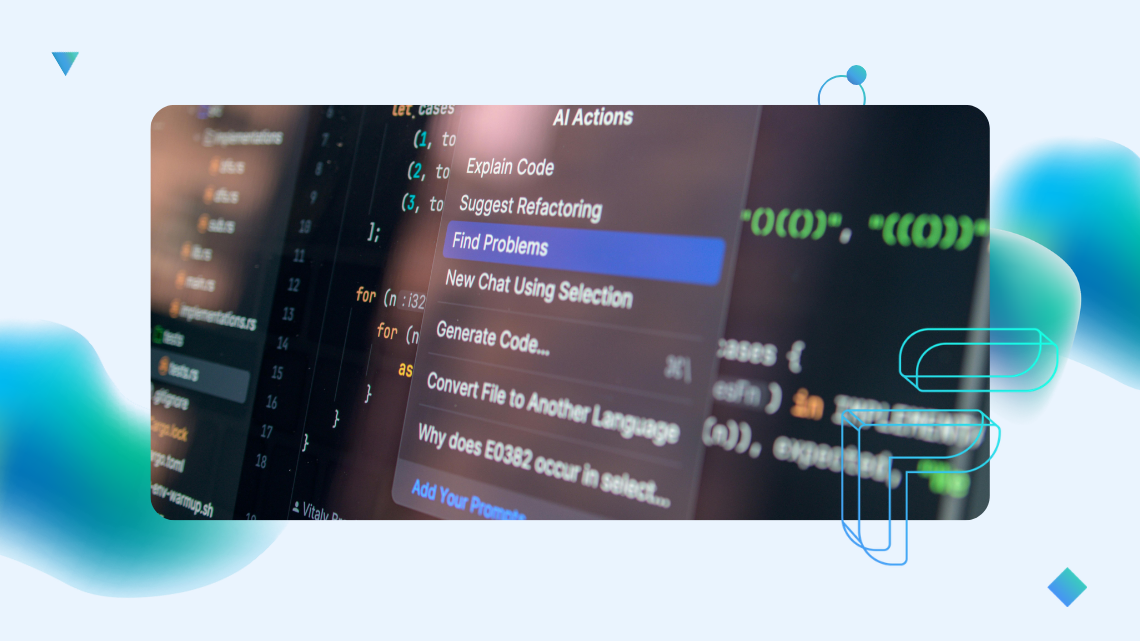
The modernisation of an old system usually fails not because of the technology, but because of a lack of knowledge: nobody knows exactly what the system does or what it depends on. Fintura’s Legacy Intelligence Platform solves this problem in a three-step process. S*.doc automatically reconstructs the system’s current documentation, Event Storming translates this into a business process map, and ai.pro enables the rapid prototyping and verification of the target solution. The result is a transition from a ‘black box’ to fact-based modernisation, without guesswork and without disrupting business operations.
Why does modernisation start with knowledge rather than code?
In many organisations, key business logic is embedded in applications written in Delphi, VB6 or legacy Java EE, without up-to-date documentation. The people who developed them have often long since left. As a result, every change carries a risk, and every decision to modernise is based on guesswork. So, before asking ‘how can we rewrite or migrate this?’, we need to answer another question first: ‘what does this system actually do, and what does it affect?’ The Legacy Intelligence Platform is the answer to precisely that question – and only then to all the others that follow.
Step One – S*.doc: system documentation that is always up to date
The starting point is S*.doc – a solution that autonomously analyses the structure of your application and generates multi-layered, always up-to-date documentation, entirely within your own infrastructure. Instead of relying on the knowledge held by a handful of specialists, you gain a clear representation of the technical knowledge: modules, dependencies, data flows and relationships between components. This is fundamental, because it is impossible to sensibly modernise a system whose structure nobody understands.
Step Two – Event Storming: from technical documentation to a process map
Technical documentation isn’t everything. To modernise effectively, you need to know which business processes the system supports and which of these are critical. This is where a process inventory using the Event Storming method comes in. This is a workshop-based method that combines the technical knowledge captured in S*.doc with the business expertise of specialists, and translates this into a process map: events, decision points and domain boundaries. This map forms the basis for analysing the impact on the business, prioritising tasks and defining the boundaries within which parts of the system can be safely replaced.
Step three – ai.pro: a rapid prototype of the target solution
With a technical and process map in hand, you can finally design the target solution — and test it before investing in a full implementation. The ai.pro methodology allows you to move from concept to a working prototype in days, not weeks. This allows you to verify the direction of your modernization using something tangible, rather than a slide — which drastically reduces the risk of a costly mistake down the road.
Why is it a pipeline rather than three separate tools?
The strength of this approach lies in the fact that each step feeds into the next. The documentation from S*.doc feeds into Event Storming, the process map guides prototyping in ai.pro, and the insights from the prototype feed back into the documentation. Knowledge is not lost between stages, and there is no need to start from scratch every time. Instead of three disjointed exercises, you get a single continuous process that leads from the question ‘what do we actually have?’ to the decision ‘what and how do we modernise?’.
This approach also ties in with the wider context of modernisation. A map of the system and its processes is what DORA requires when it comes to demonstrating resilience and identifying critical functions. This same map enables an informed choice of strategy: where to opt for a phased migration, and where a complete rewrite is justified.
What does the organisation receive?
The result is not just another document to be filed away, but four concrete outcomes. Visibility – the old system is no longer a black box. Testability – it can be covered by testing and monitoring. Decision-making insights – the board and the CFO are given facts rather than relying on intuition. And regulatory readiness – a map of critical functions and dependencies is the starting point for DORA compliance. Modernisation is no longer a leap in the dark, but becomes a series of informed, measurable steps.
FAQ
What is the Legacy Intelligence Platform?
How does S*.doc render legacy system documentation?
What is Event Storming and why is it used in modernisation?
What does ai.pro do?
Do you have to use all three elements at the same time?
Would you like to see what’s really going on in your legacy system before you decide to modernize it? Let’s talk—we’ll start by mapping out the system and processes.