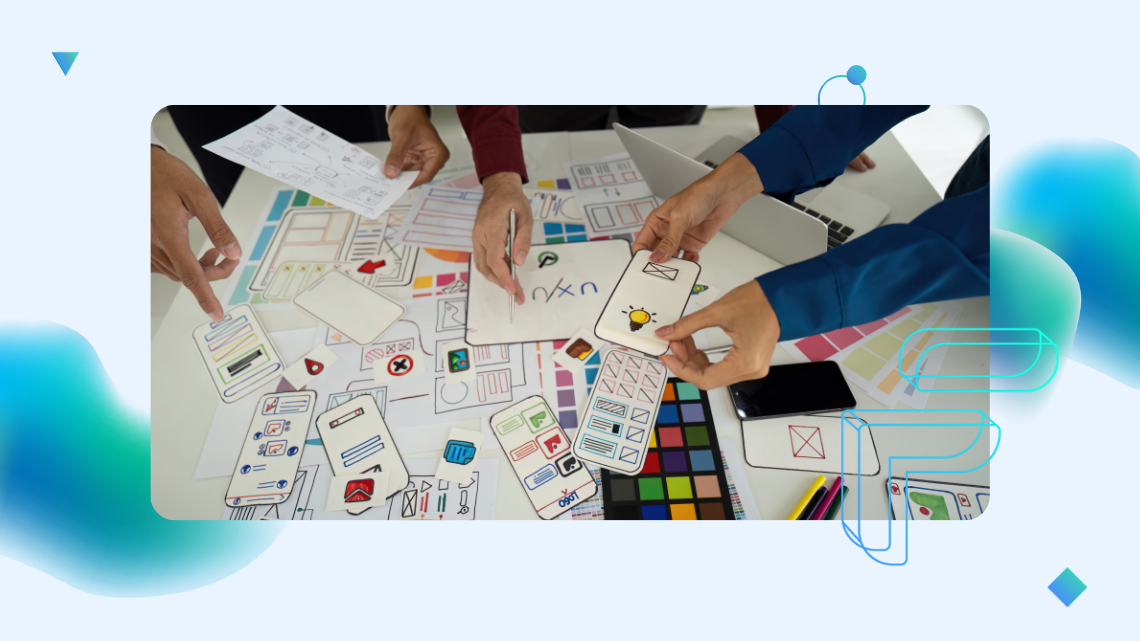
The most costly mistakes in IT projects do not stem from poor code, but from building something other than what was actually needed. The traditional approach – spending months gathering requirements and drafting specifications before anyone sees a working solution – pushes the verification stage right to the very end, when any change is already costly. The alternative is rapid prototyping: in just a few days, you build a working model of the solution and test it on something tangible before investing in a full-scale implementation. This is precisely the idea underpinning the ai.pro methodology at Finture. Below, we explain when it’s worth starting with a prototype and what difference it actually makes.
Why a specification is a poor first step
Requirements set out on paper are abstract. People react quite differently to a working screen than to a document – it is only when they see the solution that they discover what they really need and what they had overlooked. The problem is that in the ‘full specification first’ model, this verification comes at the very end, when changing direction is most costly. The result is often a solution that is perfectly in line with the specification but fails to meet the actual need. The later this comes to light, the more it costs to rectify.
A prototype as a decision-making tool, not a flashy demo
A good prototype isn’t there to impress, but to answer specific questions.
...
1. Does the designed process make sense in practice?
2. Is the interface user-friendly?
3. Is the planned integration feasible?
4. Do the business assumptions hold up?
A prototype allows you to make and correct mistakes early on, cheaply and without risk to production. It involves bringing the most difficult questions to the start of the project, rather than leaving them until the end.
How ai.pro works
The ai.pro methodology allows you to move from concept to a working prototype in days, not weeks. It shortens the ‘idea – prototype – feedback’ loop to such an extent that the direction of the solution can be verified iteratively, based on evidence rather than gut feeling. Instead of discussing a document, you’re discussing something that actually works – and that leads to a completely different quality of decision-making.
Prototyping in a regulated environment
In finance, speed must not come at the expense of control, and this is where a prototype also helps. An early, working model allows you not only to test the process and UX, but also to identify compliance issues at a sufficiently early stage – for example, whether a particular AI application falls into the high-risk category as defined by the AI Act, or how the solution relates to DORA requirements. It is better to discover such limitations in a prototype than after full implementation. Well-executed prototyping combines speed with security, rather than pitting them against each other.
When is it worth starting with a prototype?
A prototype is particularly useful in several situations: when you have a new idea for a product or process, when requirements are uncertain or disputed, when a quick investment decision is needed, and during modernization—to verify the target solution before you begin implementing it on the legacy stack. In the latter case, the prototype is the natural culmination of work on the system and process map: first, you understand what you have, and then you quickly check where you want to go. We design this as part of custom solutions, and for AI-based applications, we usually start with GenAI workshop.